
- 15/09/2026
- Clairevision Eye Hospital
- 0 Comments
- Blogs
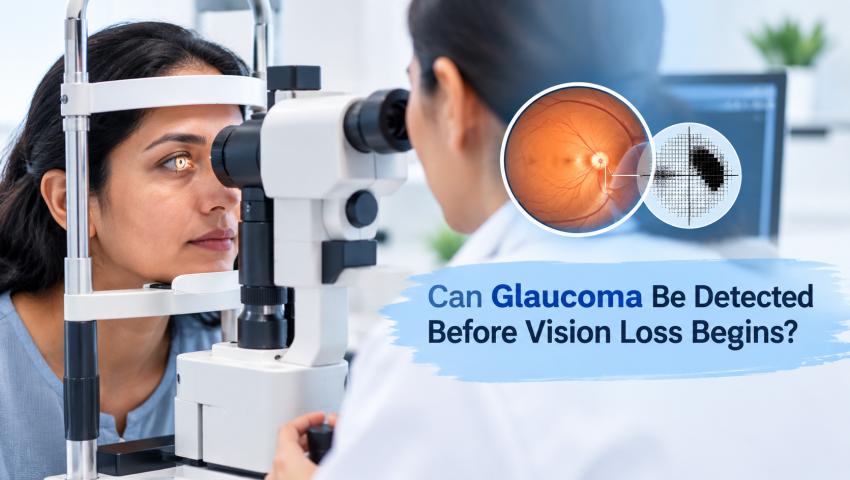
Can Glaucoma Be Detected Before Vision Loss Begins?
Imagine losing your vision slowly, without even realising it — until one day you notice you can’t see properly on one side. Scary, right? This is exactly how glaucoma works, and it’s why many people only find out once the damage is done. But here’s the good news: glaucoma and symptoms don’t always show up together, and with the right screening, this disease can be caught much before vision loss begins.
Dr. Archana Singh, a senior eye specialist with over 19 years of experience at Clairevision Eye Hospital, often tells her patients that eye pressure checks during a routine eye exam can reveal early warning signs long before any change in sight is noticed. In fact, this is exactly why more and more people are opting for Glaucoma Treatment in Wakad, where early screening is taken seriously right from the first visit.
In this blog, we’ll break down how early detection works, what tests are involved, and why regular check-ups matter more than you think.
What Happens to Your Eyes Before Vision Loss Begins? (Understanding the Disease Process)
Glaucoma is basically slow, silent damage to your optic nerve, the cable that carries visual information from your eye to your brain. Here’s how it typically progresses:
- Fluid drainage slows down – The natural fluid inside your eye doesn’t drain out properly.
- High eye pressure builds up – This buildup happens gradually, without any warning.
- Optic nerve gets compressed – Constant pressure starts damaging nerve fibres bit by bit.
- Peripheral vision fades first – Side vision is affected before central vision, so it’s barely noticeable.
- Damage becomes permanent – By the time central vision is affected, a big portion of the nerve is already lost.
The tricky part is that this whole process usually doesn’t hurt or cause any discomfort, so your eye keeps functioning normally on the surface while damage builds up underneath — and once it’s done, it can’t be reversed.
Glaucoma Can Be Detected Early — Here's How?
So, coming back to the big question — can glaucoma be detected before vision loss begins? Yes, absolutely. Modern ophthalmology has advanced tools that can spot subtle changes in the optic nerve and eye pressure long before a patient feels anything unusual.
This is why eye doctors always stress on regular, comprehensive eye exams rather than waiting for symptoms to show up. Early detection isn’t just possible, it’s actually the most reliable way to protect your eyesight for the long run.
Tests That Catch Glaucoma Before Vision Loss Starts:
There are a handful of simple, painless tests that help doctors catch glaucoma at an early stage:
- Tonometry – This checks what is eye pressure inside your eye at that moment, since abnormal readings are often the first clue.
- Ophthalmoscopy – The doctor examines your optic nerve directly to look for early signs of damage.
- OCT Scan (Optical Coherence Tomography) – A detailed imaging test that measures the thickness of nerve fibres, catching changes way before they affect vision.
- Perimetry (Visual Field Test) – Maps out your side vision to detect blind spots you might not even notice yourself.
- Gonioscopy – Checks the drainage angle of your eye to understand how fluid is flowing in and out.
Together, these tests give a complete picture and help doctors decide the right course of action, even before real vision loss kicks in. Any experienced Eye Specialist in Pune will tell you that consistency in getting these tests done is what makes the real difference.

Do Any Symptoms Appear Before Vision Loss? (Spoiler: Usually Not)
Honestly, this is the most dangerous part about glaucoma — most people don’t feel a thing. There’s rarely any pain, redness, or blurriness in the early stage. A few things patients sometimes notice, though they’re easy to brush off, include:
- Mild eyeball pressure symptoms now and then
- Occasional headaches, mistaken for stress or tiredness
- Slight difficulty adjusting in dim light
- Very minor blind spots in side vision that go unnoticed in daily life
Eye pressure signs are so subtle that even health-conscious people tend to miss them. This is exactly why relying on symptoms alone is a risky approach — proper testing is the only dependable way to catch glaucoma symptoms signs early.
Why So Many People Don't Realize They Have Glaucoma Until Vision Loss Starts?
A lot of people don’t even know glaucoma kya hota h, let alone that it’s silently affecting their eyes. Since it’s a slow-progressing glaucoma in eye disease, our brain compensates for the vision loss in one eye by relying more on the other, which means the problem often stays hidden for years. Many patients only recognise the glaucoma ke lakshan once they’ve already lost a noticeable portion of their peripheral vision — and by then, that vision cannot be restored. This is exactly why awareness matters, and why visiting the Best Eye Hospital in Wakad for a proper screening is far better than waiting for symptoms that may never clearly show up.
At What Age and How Often Should You Start Getting Tested?
Ideally, everyone should get a baseline eye exam by the age of 40, even if their vision seems perfectly fine. Testing frequency depends on your risk level:
If you’re searching for reliable Glaucoma Treatment in Wakad, it’s worth visiting a hospital that offers complete diagnostic facilities under one roof. Clairevision Eye Hospital, known as one of the trusted names for Eye Specialist in Pune, recommends yearly screenings for anyone above 35, and more frequent check-ups for high-risk individuals.
If Detected Early, How Much Vision Loss Can Actually Be Prevented?
Here’s the encouraging part — when glaucoma is caught early, doctors can slow down or even completely halt its progression. A well-planned care plan glaucoma usually includes:
- Eye drops – To reduce eye pressure and slow further damage
- Oral medication – Used alongside drops in some cases
- Laser treatment – Improves fluid drainage from the eye
- Minor surgical procedures – Recommended when other options aren’t enough
This kind of medical treatment glaucoma approach helps patients retain their existing vision for decades. While already-lost vision cannot be brought back, early treatment protects whatever vision you still have, making a massive difference in quality of life. This is one of the many reasons people specifically look for the Best Eye Hospital in Wakad, where consistent follow-ups and modern equipment ensure nothing is missed.
Conclusion: Early Detection Is Your Best Defense
To sum it up, yes — glaucoma can be detected before vision loss begins, but only if you don’t wait for symptoms to show up. Regular eye check-ups and tracking your eye pressure are simple steps that can save your eyesight in the long run.
As Dr. Archana Singh from Clairevision Eye Hospital often says, prevention is better than cure when it comes to glaucoma and symptoms that hide in plain sight. If you’re looking for dependable Glaucoma Treatment in Wakad with an experienced Eye Specialist in Pune, don’t wait — book a comprehensive eye exam today.
Frequently Asked Questions:
It begins when fluid inside the eye doesn’t drain out properly, causing pressure to build up slowly over months or years. Dr. Archana Singh notes that most patients at Clairevision Eye Hospital have no idea this has started until a routine pressure check reveals it.
In most cases, there’s genuinely no noticeable first sign — no pain, no redness, no sudden blur. That’s exactly why specialists rely on tools like tonometry and OCT scans instead of waiting for symptoms.
Common causes of high eye pressure include genetics, advancing age, thin corneas, and conditions like diabetes or high blood pressure. Prolonged steroid use and past eye injuries are also considered during diagnosis.
Yes, most people live completely normal, active lives with proper treatment and regular monitoring, maintaining stable vision for decades with good follow-up.
It becomes noticeably more common after 40, which is why ophthalmologists recommend this age as the starting point for annual screening.
There’s no permanent cure yet, but it can be effectively managed with eye drops, laser treatment, or surgery depending on severity. Most patients who stick to treatment see no further decline.
Yes, a family history increases your risk significantly, sometimes three to four times more. This is why doctors always ask about family history at the first consultation.
If left untreated for long, yes — the optic nerve damage becomes irreversible once it progresses too far, which is why early screening is emphasised so strongly.
Not necessarily — with early detection and consistent treatment, blindness is largely preventable. What matters most isn’t the diagnosis itself, but how early it’s caught and how disciplined the follow-up care is.