
- 28/07/2026
- Clairevision Eye Hospital
- 0 Comments
- Blogs
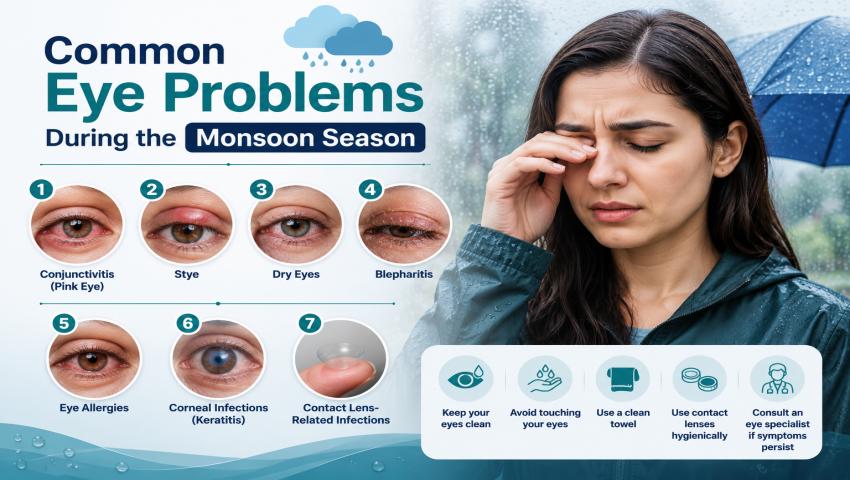
Common Eye Problems During the Monsoon Season
Itchy eyes during the rainy season are a common concern because increased humidity, dust, allergens, and contaminated water can increase the risk of eye irritation and infections. Common eye problems during the monsoon season are something almost every household deals with once the rains set in. The monsoon finally brings relief from the heat, but for your eyes, the rains often mean the opposite of relief. Every year, clinics across the country see a sharp rise in patients walking in with red, itchy, watering eyes the moment the first showers hit. If you’ve noticed your eyes feeling more irritated than usual lately, you’re not imagining it — and you’re definitely not alone.
“Every monsoon, we see a 30-40% jump in patients coming in with eye infections and irritation,” says Dr. Archana Singh, a trusted eye specialist in Pune with 19 years of experience treating eye conditions at Clairevision Eye Hospital, known as one of the best eye hospitals in Wakad. “The humidity, the contaminated rainwater, and the fact that most people don’t change their daily habits during this season- all of this together creates the perfect storm for eye infections during monsoon.”
Why Eye Problems Increase During Monsoon?
Warm, humid weather is basically a five-star hotel for bacteria, viruses, and fungi. During monsoon, moisture in the air allows these microorganisms to multiply much faster than they normally would — and your eyes, being moist and exposed, become an easy target.
On top of that, rainwater itself isn’t as clean as it looks. It picks up dust, pollutants, and contaminants on its way down, and a splash of this dirty water on your face is often enough to introduce infection-causing microbes straight to your eyes. Add waterlogged streets, shared umbrellas, damp towels, and crowded public transport into the mix, and you can see why eye problems spike so quickly once the rains set in.
7 Most Common Eye Problems During Monsoon Season:
Understanding the common eye problems during the monsoon season can help you identify early symptoms and seek timely treatment before minor irritation develops into a serious eye infection.
1. Conjunctivitis (Pink Eye):
Conjunctivitis, commonly known as pink eye, is one of the most common eye infections during the monsoon. The increased humidity and the easy spread of viruses via contaminated hands, towels, and shared surfaces make viruses highly contagious during the rainy season.
Common symptoms include:
- Red or pink eyes
- Itching and irritation
- Watery or sticky discharge
- Eyelids sticking together after waking up.
How to prevent it?
- Wash your hands regularly.
- Avoid rubbing your eyes.
- Do not share towels, handkerchiefs, or pillows.
- Maintain good personal hygiene.
If you experience severe eye pain, blurred vision, excessive swelling, or symptoms that persist for more than a few days, consult an eye specialist immediately.
2. Stye:
A stye is a painful, red lump that develops on the eyelid when an oil gland becomes blocked or infected by bacteria. The warm and humid weather during the monsoon creates favourable conditions for bacterial growth, making styes more common during this season.
Common symptoms include:
- Painful bump on the eyelid
- Swelling and redness
- Tenderness around the affected area
- Watering eyes
How to prevent it?
- Keep your eyelids clean.
- Remove eye makeup before sleeping.
- Avoid touching your eyes with unwashed hands.
- Do not squeeze or pop the stye.
Seek medical attention if the swelling becomes severe, affects your vision, or does not improve after a few days.
3. Dry Eyes:
Although the weather feels humid, many people experience dry eyes during the monsoon due to prolonged screen time, frequent use of air conditioners, and reduced blinking. This can leave your eyes feeling irritated and tired, even in rainy weather.
Common symptoms include:
- Burning or stinging sensation
- Scratchy or gritty feeling
- Eye fatigue
- Temporary blurred vision
How to prevent it?
- Follow the 20-20-20 rule while using digital devices.
- Stay well hydrated.
- Blink frequently when using screens.
- Use lubricating eye drops only if recommended by your doctor.
Visit an eye specialist if dryness becomes persistent or starts affecting your daily routine.
4. Blepharitis:
Blepharitis is a common condition that causes inflammation along the edges of the eyelids. During the monsoon, increased humidity and poor eyelid hygiene can encourage bacterial growth, making the condition more frequent and recurrent.
Common symptoms include:
- Red or swollen eyelids
- Burning sensation
- Flaky skin around the eyelashes
- Crusting along the eyelid margins
How to prevent it?
- Clean your eyelids regularly.
- Wash your face before sleeping.
- Avoid sharing eye makeup or cosmetics.
- Maintain proper eyelid hygiene.
Consult an eye specialist if the symptoms recur frequently or fail to improve with regular eyelid care.
5. Eye Allergies:
The rainy season creates an ideal environment for mould spores, dust mites, and pollen, all of which can trigger eye allergies. While rubbing your eyes may provide temporary relief, it often worsens the irritation.
Common symptoms include:
- Itchy eyes
- Excessive watering
- Redness
- Puffy eyelids
How to prevent it?
- Avoid rubbing your eyes.
- Keep your surroundings clean and dry.
- Wear sunglasses when outdoors.
- Wash your face after returning home.
If your allergy symptoms become severe or interfere with your daily activities, seek professional eye care.
6. Corneal Infections (Keratitis):
Keratitis is a serious infection or inflammation of the cornea that requires prompt medical attention. Exposure to contaminated rainwater, improper contact lens hygiene, and microbial infections increase the risk during the monsoon.
Common symptoms include:
- Severe eye pain
- Blurred vision
- Sensitivity to light
- Excessive tearing
- Redness
How to prevent it?
- Avoid exposing your eyes to contaminated water.
- Practise proper contact lens hygiene.
- Never ignore persistent eye pain or redness.
- Wear protective eyewear while travelling in the rain.
Seek immediate medical care if you notice sudden vision changes, severe pain, or increased light sensitivity.
7. Contact Lens-Related Infections:
People who wear contact lenses are at a higher risk of developing eye infections during the monsoon. Rainwater exposure, poor lens hygiene, and reusing old lens solution can allow harmful microorganisms to enter the eyes.
Common symptoms include:
- Eye irritation
- Redness
- Watering
- Blurred vision
- Discomfort while wearing lenses
How to prevent it?
- Wash your hands before handling contact lenses.
- Replace lens solution every day.
- Never wear lenses while swimming or during an active eye infection.
- Follow your eye specialist’s instructions for lens care.
Remove your contact lenses immediately and consult an eye specialist if you experience persistent redness, pain, or blurred vision.
Symptoms You Shouldn't Ignore during the monsoon:
Symptoms of an eye infection during the monsoon may include redness, persistent itching, excessive watering, swelling, sensitivity to light, and discharge. While mild redness or occasional watering usually settles on its own, certain symptoms are your body’s way of telling you to see a doctor without delay:
- Thick or pus-like discharge
- Persistent redness lasting more than a day or two.
- Swelling around the eyelids
- Pain or unusual sensitivity to light
- Blurred vision or sudden vision changes
- Eyes that feel stuck shut in the morning
None of these should be self-diagnosed or self-medicated, especially since viral and bacterial infections require completely different treatments.
How to Prevent Eye Problems During Monsoon?
The good news is that most eye problems during the monsoon season are entirely preventable with a few consistent habits. None of these require any special products or effort — just a bit of awareness in your daily routine.
- Wash your hands frequently, and avoid touching or rubbing your eyes with unwashed hands.
- Don’t share towels, handkerchiefs, pillow covers, or eye makeup with anyone.
- If rainwater splashes on your face, rinse your eyes gently with clean water.
- Replace contact lens solution after every use — never top it off or use tap water.
- Avoid wearing contact lenses if your eyes are already red or irritated.
- Throw away eye makeup that’s more than three months old.
- Carry a clean pair of glasses as backup during heavy rains, especially if you ride a two-wheeler.
- Never self-medicate with leftover eye drops or antibiotics — always consult a professional.
To reduce the risk of itchy eyes during rainy season, avoid rubbing your eyes, wash your hands regularly, and avoid using contaminated water around the eyes.
When Should You Visit an Eye Specialist During the Monsoon?
Most monsoon eye problems are mild and resolve within a few days with basic hygiene and care. But if redness doesn’t improve after two days, if there’s pain, swelling, discharge, or any vision change, it’s time to stop waiting and get it checked.
“People often delay treatment thinking it’s ‘just a seasonal thing’ that will pass on its own,” notes Dr. Archana Singh. “But conditions like keratitis, if left untreated, can affect vision permanently. When in doubt, it’s always safer to get it examined.” If you’re searching for a reliable eye specialist in Pune, getting an early consultation at a trusted clinic like the Best Eye Hospital in Wakad can make the difference between a quick recovery and a complicated one.
Conclusion:
Common eye problems during the monsoon season are common but often preventable with good eye hygiene and timely care. Don’t ignore symptoms like persistent redness, pain, discharge, or blurred vision, as early treatment can help prevent complications.
If you notice any of these signs, consult Dr. Archana Singh at Clairevision Eye Hospital, a trusted Eye Specialist in Pune and one of the Best Eye Hospitals in Wakad, for expert diagnosis and treatment. Taking simple precautions can help reduce the risk of itchy eyes during rainy season and other common monsoon-related eye problems.
FAQs:
Conjunctivitis, or pink eye, is by far the most common eye infection seen during the rainy season, largely because it spreads so easily through contact and shared items.
Yes. Rainwater often carries dust, pollutants, and microorganisms that can irritate the eyes and increase the risk of infection, especially if it splashes directly into your eyes.
It is, as long as you maintain strict hygiene — clean hands, fresh lens solution, and avoiding lens wear if your eyes show any signs of redness or irritation.
Most cases clear up within 4 to 7 days with proper care, though it remains contagious for the first few days.
Surprisingly, yes. Cooler temperatures and increased air-conditioning use during the monsoon can reduce eye moisture, leading to dryness and irritation.
If redness, pain, discharge, or blurred vision persists beyond a day or two, it’s best to consult an eye specialist rather than waiting it out.