
- 17/06/2026
- Clairevision Eye Hospital
- 0 Comments
- Blogs
Digital Eye Strain Due to Mobile & Computer Use
Have you ever noticed your eyes feeling tired, dry, or uncomfortable after spending hours on your mobile phone or computer? In today’s digital world, screens have become an unavoidable part of daily life. Whether you are working, studying, shopping, or staying connected with loved ones, prolonged screen exposure has become the norm. As a result, Digital Eye Strain, also known as Computer Vision Syndrome, is becoming increasingly common among people of all age groups.
Many individuals experience symptoms such as eye fatigue, blurred vision, headaches, and dry eyes without realizing that excessive screen use may be the underlying cause. While these symptoms may seem temporary, ignoring them can affect both your eye health and overall productivity.
At Clairevision Eye Hospital, a trusted name and one of the best eye hospital in Wakad, Pune, patients receive expert care for a wide range of eye conditions, including screen-related eye problems. With over 19 years of experience, Dr. Archana Singh has helped numerous patients manage digital eye discomfort and maintain healthy vision in an increasingly digital lifestyle.
What Is Digital Eye Strain and Why Is It Increasing?
Digital Eye Strain refers to a group of vision and eye-related problems that occur due to prolonged use of digital devices such as smartphones, laptops, desktops, and tablets. The condition is commonly referred to as Computer Vision Syndrome because it is often associated with extended computer use.
The increasing dependence on digital technology has significantly contributed to the rise in digital eye fatigue. Remote work, online education, social media usage, and digital entertainment have resulted in longer screen exposure than ever before. Many individuals spend several hours each day focusing on screens without adequate breaks, leading to discomfort and visual fatigue.
How Mobile Phones and Computers Cause Digital Eye Strain?
Digital devices affect the eyes in several ways. One of the most common reasons behind eye strain due to mobile use is the tendency to hold smartphones very close to the face. This increases the effort required by the eye muscles to focus continuously.
Similarly, extended computer use often involves staring at a screen for long periods without breaks. This constant visual demand can lead to fatigue and discomfort.
Some common causes include:
- Excessive Screen Time: Spending long hours on digital devices increases stress on the eyes. Continuous focus on screens without rest can result in visual fatigue and discomfort.
- Reduced Blinking: People naturally blink less frequently while using screens. Reduced blinking can lead to dry eyes, irritation, and a feeling of grittiness.
- Blue Light Exposure: Digital devices emit blue light, which may contribute to eye discomfort and disrupt sleep patterns when screen usage continues late into the night.
- Poor Viewing Distance and Posture: Using devices too closely or sitting in an improper position can increase strain on both the eyes and neck muscles.
- Screen Glare and Improper Lighting: Reflections from screens and poor room lighting conditions can force the eyes to work harder, contributing to screen-related eye problems.
Common Symptoms of Digital Eye Strain from Screen Use:
The symptoms of digital eye strain can vary from person to person. Some individuals experience occasional discomfort, while others may develop persistent symptoms.
Common signs include:
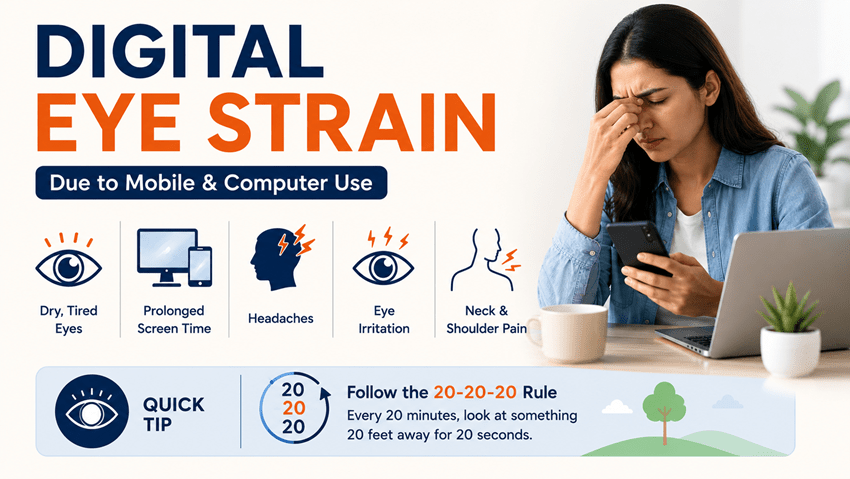
- Dry Eyes: Reduced blinking during screen use can make the eyes feel dry and uncomfortable.
- Eye Fatigue: Long hours of screen use can leave the eyes feeling tired and strained.
- Blurred Vision: Continuous focusing on screens may cause temporary blurry vision.
- Burning or Irritated Eyes: Screen exposure can lead to irritation, burning, or discomfort in the eyes.
- Watery Eyes: The eyes may produce excess tears in response to dryness and irritation.
- Headaches: Eye strain from screens can often trigger headaches.
- Difficulty Focusing: It may become harder to focus clearly after prolonged screen time.
- Sensitivity to Light: Bright screens and glare can make the eyes more sensitive to light.
- Neck and Shoulder Pain: Poor posture while using digital devices can cause neck and shoulder discomfort.
These symptoms often become more noticeable after prolonged mobile use or extended computer use. Although the symptoms may improve after resting the eyes, recurring discomfort should not be ignored.
Effects of Digital Eye Strain on Eye Health and Daily Life:
Digital eye strain does not usually cause permanent vision loss, but it can significantly impact daily activities and overall well-being.
Persistent eye discomfort can reduce productivity at work, affect concentration during studies, and make routine activities more challenging. Individuals suffering from digital eye fatigue may find it difficult to focus for extended periods and often experience increased tiredness by the end of the day. A timely visit to a general ophthalmology clinic can help identify underlying causes and provide the right treatment before symptoms worsen.
Dry eyes caused by prolonged screen exposure can also become a chronic issue if not managed appropriately. Additionally, frequent headaches and visual discomfort can affect quality of life and workplace performance.
Tips to Prevent Digital Eye Strain by Dr Archana Singh:
Fortunately, several simple measures can help reduce eye strain from screens and improve visual comfort.
- Maintain Proper Screen Distance : Keep your computer screen at an arm’s length and position it slightly below eye level.
- Adjust Screen Brightness : Ensure that screen brightness matches the surrounding environment to reduce visual stress.
- Blink Frequently : Consciously blinking more often can help maintain adequate moisture on the eye surface and reduce dry eyes.
- Take Regular Breaks : Short breaks throughout the day allow the eyes to relax and recover from continuous focusing.
- Improve Workplace Ergonomics : A comfortable seating position and properly arranged workstation can reduce both eye strain and physical discomfort.
- Limit Unnecessary Screen Time : Reducing non-essential screen usage can help decrease overall visual fatigue and promote healthy screen habits.
The 20-20-20 Rule: A Simple Way to Reduce Eye Strain
One of the most effective techniques for preventing digital eye strain is the 20-20-20 Rule.
The rule is simple:
Every 20 minutes, look at something 20 feet away for at least 20 seconds.
This brief break allows the eye muscles to relax and reduces the stress caused by continuous focusing on nearby screens. Following the 20-20-20 Rule regularly can help minimize symptoms of Computer Vision Syndrome and improve overall visual comfort.
Incorporating this habit into your daily routine is one of the easiest ways to maintain healthier eyes while using digital devices.
Treatment Options at Clairevision Eye Hospital:
If symptoms persist despite following preventive measures, it may be time to seek professional eye care.
An eye examination can help identify underlying vision problems that may be contributing to digital eye strain. Treatment options may include:
- Prescription glasses for screen use
- Dry eye management
- Artificial tears
- Vision correction solutions
- Personalized recommendations for screen usage
At Clairevision Eye Hospital, Dr. Archana Singh provides comprehensive eye evaluations to identify the root cause of visual discomfort and recommend appropriate treatment. As an experienced Eye Specialist in Pune, she helps patients manage Computer Vision Syndrome and other screen-related eye problems through personalized care and guidance.
Early intervention can prevent symptoms from worsening and ensure long-term visual comfort.
Conclusion: Protecting Your Eyes in a Digital-First World
Digital devices have transformed the way we live and work, but they have also increased the risk of Digital Eye Strain and Computer Vision Syndrome. Excessive screen time, prolonged mobile use, extended computer use, reduced blinking, and blue light exposure can all contribute to eye discomfort and visual fatigue.
The good news is that simple lifestyle changes, healthy screen habits, and the consistent use of the 20-20-20 Rule can significantly reduce eye strain and improve comfort. If symptoms persist, consulting an experienced Eye Specialist in Pune is important for accurate diagnosis and treatment. Book an appointment with an eye care specialist for a comprehensive eye examination and personalized guidance to protect your vision.
By taking proactive steps today, you can protect your eyes and enjoy a healthier relationship with technology in the years ahead.
Frequently Asked Questions:
Yes, digital eye strain can be managed with simple habits like the 20-20-20 rule, reducing screen time, and using lubricating eye drops. For persistent symptoms, consult Dr. Archana Singh for a personalized treatment plan.
Yes, excessive phone use reduces blinking, causes dry eyes, and strains eye muscles. If you experience discomfort due to prolonged screen use, visit Clairevision Eye Hospital, Wakad, Pune for an expert eye evaluation.
Not always. However, uncorrected vision problems can worsen screen-related strain. Dr. Archana Singh at Clairevision Eye Hospital, Pune will conduct a thorough eye check-up to determine whether glasses or lifestyle changes are right for you.
Every 20 minutes, look at something 20 feet away for 20 seconds — this relaxes your eye muscles and reduces fatigue. Dr. Archana Singh recommends this as a simple yet powerful habit for protecting your digital eye health.
